Swiss SBB Train Types Explained: IR vs IC (Ultimate Guide)
Key Takeaway: InterCity (IC) trains zip between Zurich and Bern in exactly 56 minutes for roughly 50 CHF. But you should always check the specific Swiss SBB train types and categories before buying your rail ticket. You can easily book train tickets online to secure the best upper-deck seats on these fast routes.
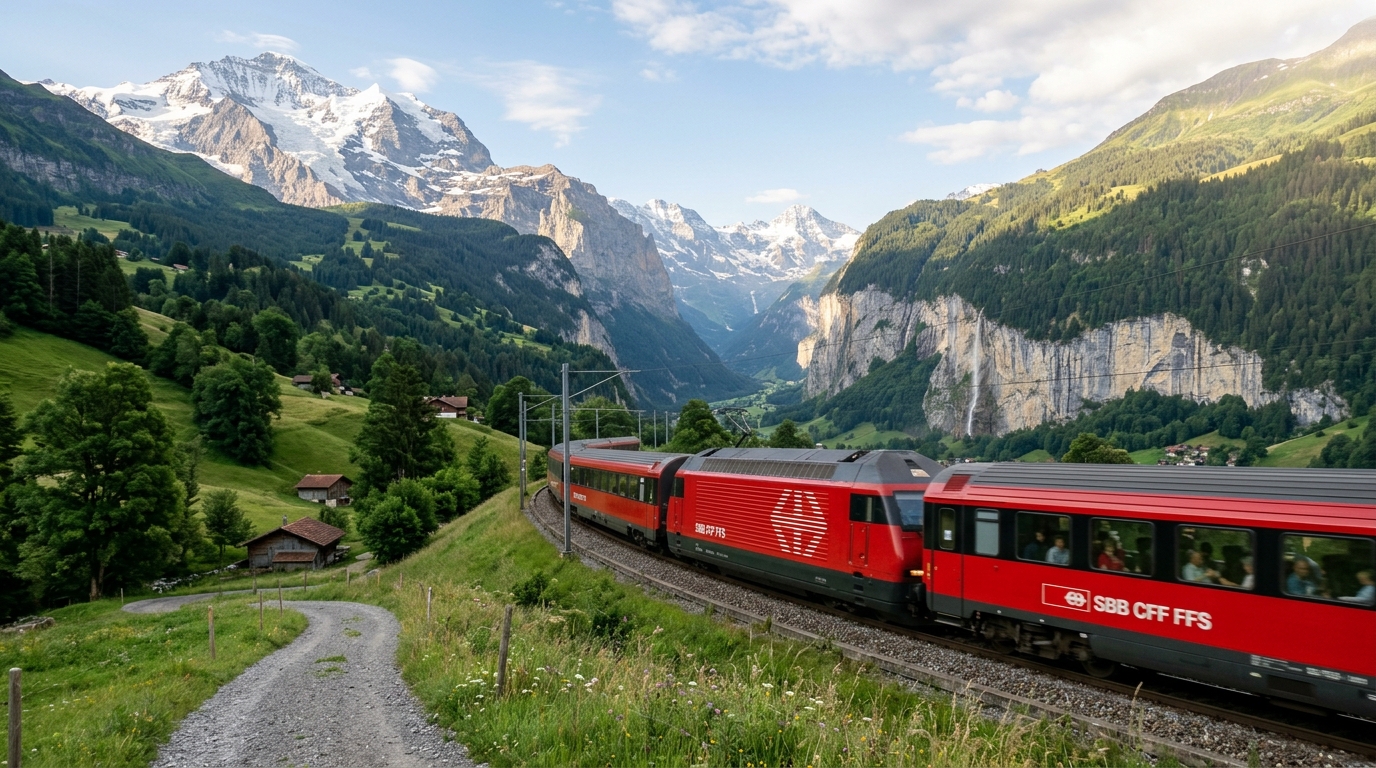
The large departure board at Zurich Hauptbahnhof flashes a dizzying alphabet soup of bright red letters. You might feel totally overwhelmed. Understanding the different Swiss SBB train types is actually essential for your 2026 trip. This knowledge saves you cash. And knowing exactly which train you are boarding prevents you from missing that important airport connection. We have spent years riding these pristine tracks across the snowy Alps and deep green valleys. The system operates smoothly, with various Swiss SBB train types catering to different traveler needs.
Decoding Swiss SBB Train Types: The Alphabet Soup
Most tourists simply stare at the platform displays with absolute confusion before jumping on any train. Do not make this mistake; identifying SBB train types in Switzerland is the key to a stress-free commute. The letters prefixing your train number dictate your speed, your comfort, and your ultimate journey time. Here is the breakdown of the core Swiss SBB train types.
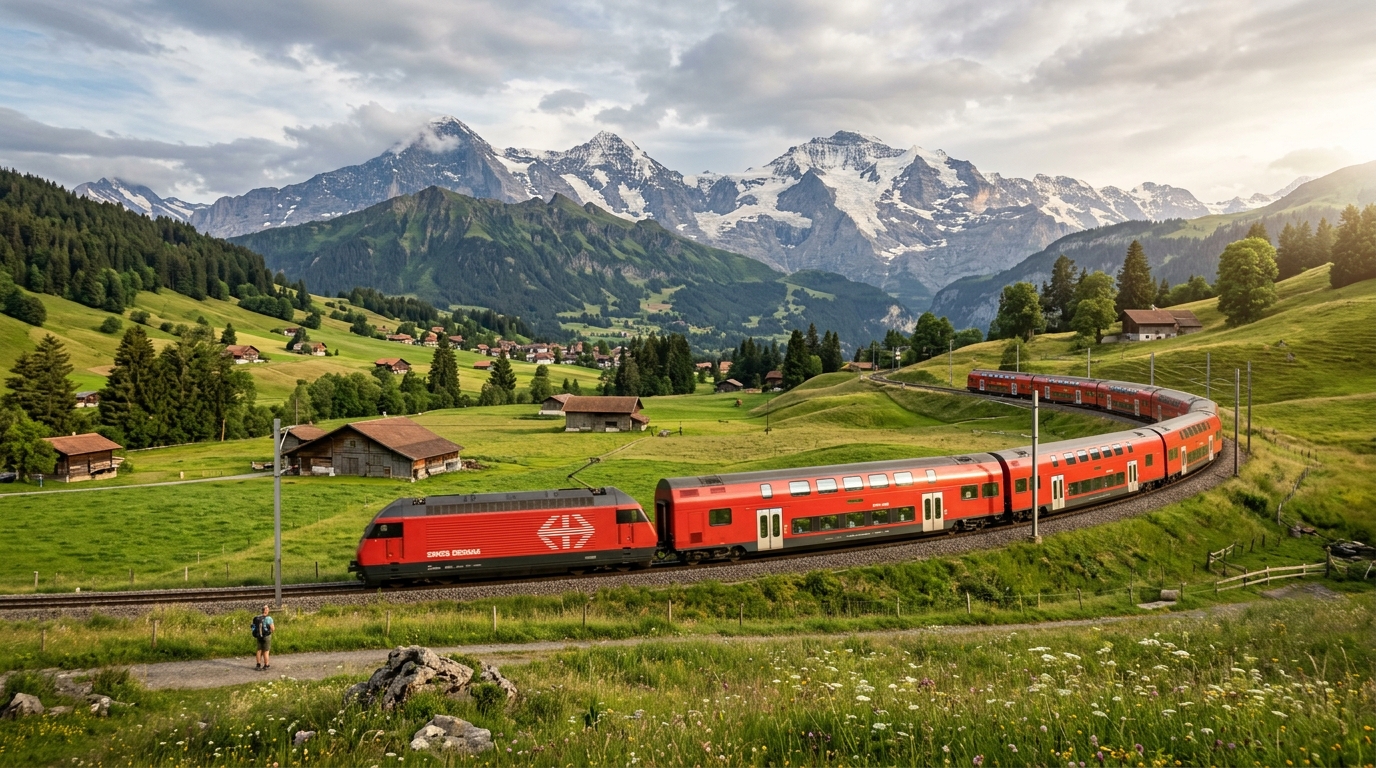
- IC (InterCity): These fast double-decker giants connect major Swiss hubs with impressive, clockwork efficiency every single day. They skip the tiny villages.
- IR (InterRegio): These comfortable trains bridge the gap between high-speed express routes and slower local commuter services. They stop at medium-sized towns.
- ICE (InterCity Express): The sleek white German trains hit impressive speeds once they cross the border heading toward Frankfurt. They offer premium onboard dining.
- EC (EuroCity): These international workhorses carry passengers directly through the long mountain tunnels into neighboring Italy and Austria. You need a seat reservation.
InterCity (IC): The Fast Domestic Flyers
Among the various Swiss SBB train types, InterCity trains are the absolute backbone of the entire Swiss domestic rail network. They rarely stop at villages. You can cross the entire country from Geneva to St. Gallen without ever changing your seat. This makes traveling incredibly relaxing. If you want to ride upstairs for the best panoramic views, grab your tickets quite early. Check latest prices on swissrail.net.
The popular route covered in our Zurich to Bern train route guide takes exactly 56 minutes. Fares usually start around 50 CHF. But booking a Supersaver ticket three weeks in advance drops that price down to 20 CHF. You simply cannot beat that. Every single IC train features a dedicated restaurant car serving surprisingly decent hot meals and cold beer. The coffee is quite good, making this one of the most popular SBB train types for business travelers. According to the SBB Official Timetable, these trains depart exactly on the half-hour mark.
InterRegio (IR): The Scenic Middle Ground
Riding an InterRegio train gives you a slightly slower but significantly more picturesque journey across Switzerland, compared to faster Swiss SBB train types. They stop at medium-sized towns. While an IR train takes slightly longer than an IC, it often follows much more scenic routes. The windows are usually large and perfect for photography. Riding the IR from Zurich to Lucerne takes about 41 minutes and costs roughly 25 CHF. You should definitely book at swissrail.net to secure your spot.
These trains lack the fancy dining cars found on the faster InterCity routes across the country. Bring your own delicious snacks. But they do offer fantastic legroom and incredibly reliable mobile phone reception throughout the entire journey. Locals love the IR trains, which remain one of the most reliable types of Swiss SBB trains for outdoor enthusiasts.
Regional Express (RE) and S-Bahn (S): The Local Network
While express Swiss SBB train types get all the glory, the local network is what truly connects the country. Regional Express (RE) trains link smaller towns to the major SBB hubs, running at moderate speeds. They are perfect for reaching secondary destinations that the IC routes bypass entirely. If you are heading into the mountains or visiting a secluded lake, you will likely transfer to an RE train for the final leg of your journey.
Then you have the S-Bahn (S) network. These are the suburban commuter trains operating around major cities like Zurich, Geneva, and Basel. They stop at every single station along the line. Fares for local S-Bahn trips usually cost under 10 CHF depending on the zones you cross. You can easily buy local tickets online or via the station app.
| Feature | InterCity (IC) | InterRegio (IR) | Action |
|---|---|---|---|
| Average Speed | Up to 200 km/h | Up to 160 km/h | Book IC |
| Stopping Pattern | Only major city hubs | Major hubs and regional towns | Book IR |
| Dining Options | Full restaurant car available | Vending machines or nothing | Check Fares |
| Seat Reservations | Not required but recommended | Not required at all | Reserve Seats |
EuroCity (EC) and ICE: The International Heavyweights
Switzerland sits perfectly in the middle of Europe, making it a major hub for international rail, integrating high-speed Swiss SBB train types with foreign networks. German ICE trains frequently visit. The sleek white ICE trains hit impressive speeds of 300 km/h once they cross the German border. EuroCity trains connect to Italy. If you take an EC train featured in our Zurich to Lugano journey guide, you will experience the stunning Gotthard Base Tunnel. That journey takes two hours.
Prices for these cross-border journeys fluctuate wildly depending on exactly when you purchase your international tickets. Always book train tickets online early. A last-minute ticket to Milan might cost you upwards of 120 CHF at the station counter. Buying a month ahead drops that exact same EuroCity fare down to a very reasonable 39 CHF. The Trenitalia Network requires mandatory seat reservations for all passengers crossing the Italian border.
| Feature | InterCity Express (ICE) | EuroCity (EC) | Action |
|---|---|---|---|
| Primary Direction | Germany and the Netherlands | Italy and Austria | Book ICE |
| Onboard Vibe | Quiet, sleek, business-focused | Lively, scenic, tourist-heavy | Book EC |
| Seat Reservations | Optional within Swiss borders | Mandatory for cross-border trips | Check Fares |
What Changes for Swiss Trains in 2026?
The Swiss rail network is introducing several significant upgrades to their rolling stock for the 2026 timetable across all major Swiss SBB train types. You will notice faster Wi-Fi. Almost all IC trains in 2026 now feature dedicated quiet zones and vastly improved luggage storage racks. This makes family travel easier. Understanding the Swiss train seat classes helps you pick the perfect spot for your long journey. First class is surprisingly affordable.
SBB is also rolling out brand new Giruno trains on the major EuroCity routes heading south, adding to the diversity of SBB train types in Switzerland. These trains are absolutely stunning. They feature low-floor entrances that make rolling heavy suitcases onto the train a total breeze. You can easily book at swissrail.net today.
Navigating Swiss SBB Train Types Like a Local
Tourists stick out immediately when they drag heavy suitcases up the wrong carriage steps during rush hour. You can avoid this embarrassment. Follow these specific strategies to navigate the Swiss rail network with the confidence of a seasoned commuter.
- Always check the platform composition boards before your train actually arrives at the busy station platform. This saves you running around. The blue screens show exactly where first class and second class carriages will stop along the track.
- The dining cars on IC trains serve surprisingly good traditional meals like hot, bubbling cheese fondue. They are quite expensive though. Splurging on a meal while passing Lake Geneva is an unforgettable experience worth the high price tag.
- Review the Swiss train luggage rules so you never block the narrow aisles with bags. Locals hate blocked train aisles. Use the storage racks located near the sliding glass doors at the end of every carriage.
- If you plan multiple long trips, calculating the value of a Swiss Travel Pass is essential. It might save you hundreds. The pass covers nearly all IC and IR trains without requiring any additional seat reservation fees.
- You can lock in the absolute lowest supersaver fares by booking directly through the official ticketing portal. These tickets sell out fast. Always book train tickets online at least three weeks before your planned 2026 Swiss vacation begins.
Frequently Asked Questions
What is the difference between the main Swiss SBB train types, specifically IC and IR?
IC (InterCity) trains are fast, double-decker express services connecting major cities with few stops, while IR (InterRegio) trains serve medium-sized towns and bridge the gap between regional and express routes.
Do I need a seat reservation for Swiss EC trains?
Seat reservations are generally required for EuroCity (EC) trains because they are international services traveling between Switzerland and neighboring countries like Italy or Austria.
How long is the train from Zurich to Bern?
The direct InterCity (IC) train from Zurich to Bern takes exactly 56 minutes and costs approximately 50 CHF for a standard one-way second-class ticket.
What are Swiss ICE trains?
ICE (InterCity Express) trains are high-speed German trains operating on Swiss routes toward Frankfurt, featuring premium comfort and full-service dining cars.
How can I get cheap SBB train tickets?
Supersaver tickets are the best way to get cheap SBB fares, offering discounts of up to 70% when booked several weeks in advance through swissrail.net.
Are there restaurants on Swiss InterCity trains?
Most Swiss InterCity (IC) trains feature a dedicated restaurant car or a bistro service offering hot meals, snacks, coffee, and beverages during the journey.