Swiss Travel Pass Guide
Key Takeaway: For 2026, the 3-day Swiss Travel Pass starts at approximately CHF 244, offering unlimited travel on trains, boats, and buses plus entry to 500+ museums. It pays for itself if you plan at least two major inter-city journeys and one mountain excursion. Book your Swiss Travel Pass at swissrail.net to receive your mobile pass details by email after issuance.
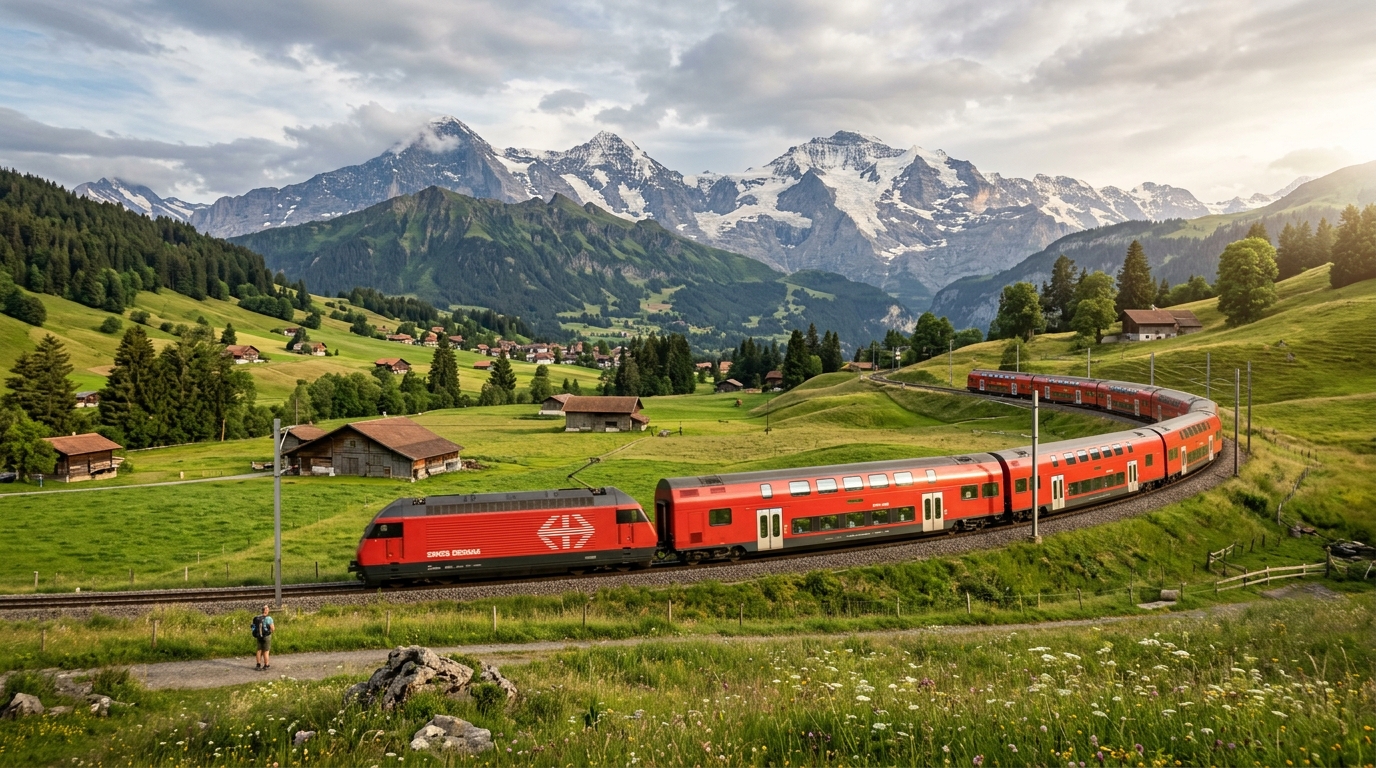
The train pulls out of Zurich Flughafen precisely on the second. You are not fumbling with a ticket machine or squinting at a confusing zone map. Instead, you are watching the suburban sprawl melt into emerald hills while sipping a coffee in the dining car. This is the Swiss Travel Pass experience in 2026: pure, unadulterated mobility without the friction of individual transactions. If you value your time as much as your budget, this pass is the single most important document you will carry across the border.
What exactly does the Swiss Travel Pass cover in 2026?
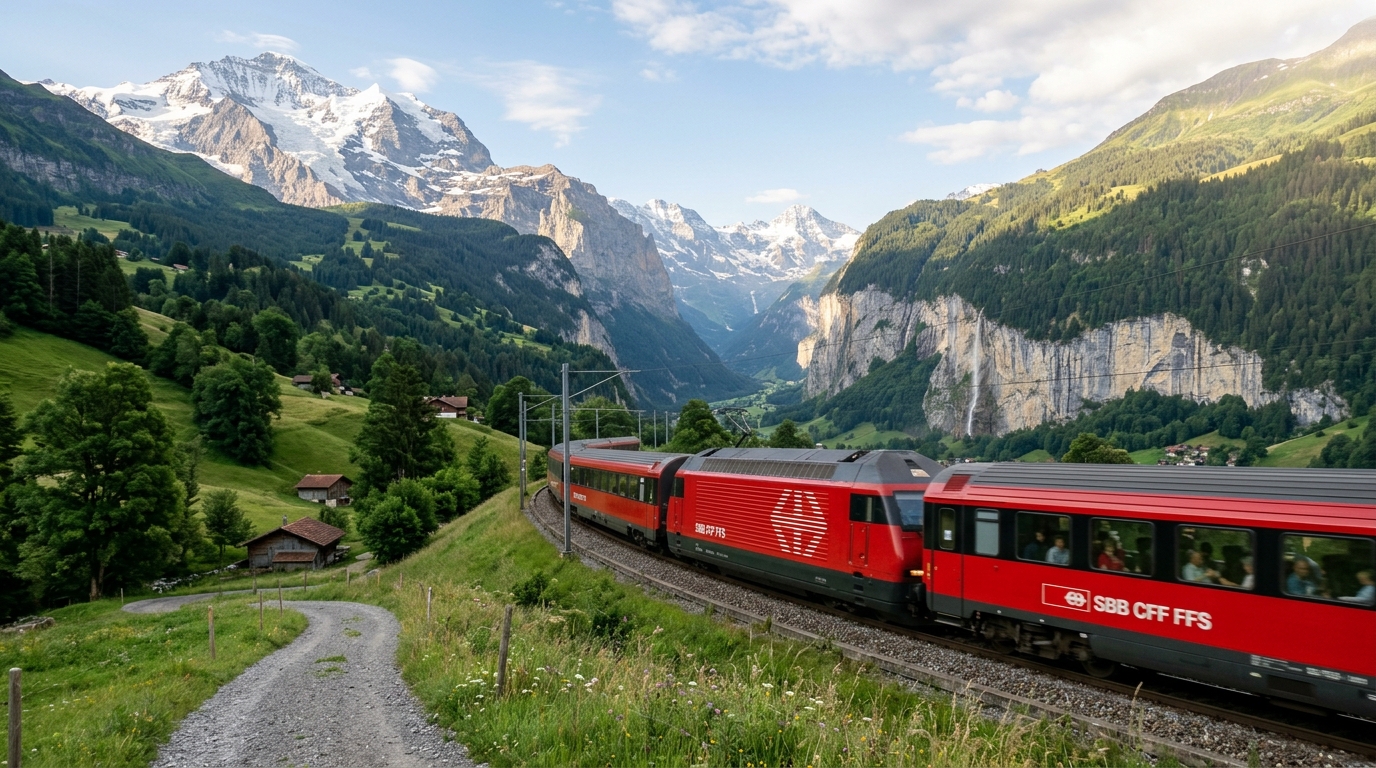
Think of this pass as a master key to the entire nation. It isn't just for the big red SBB trains you see in the brochures. It covers the yellow PostBuses that wind up impossible mountain hairpins and the historic paddle steamers churning across Lake Brienz. The Swiss Travel Pass offers unlimited travel on the entire Swiss Travel System network, covering roughly 29,000 kilometers of rail, road, and waterway. You simply hop on, find a seat, and show your QR code when the conductor wanders by with their scanner.
- Unlimited Rail Travel: Includes all SBB lines and most private railways like the Matterhorn Gotthard Bahn.
- Urban Transit: Included use of trams and buses in more than 90 Swiss towns and cities.
- Waterways: Full coverage on major lakes including Thun, Brienz, Lucerne, and Geneva.
- The Museum Bonus: Free admission to over 500 museums, from the FIFA Museum in Zurich to the Chillon Castle in Montreux.
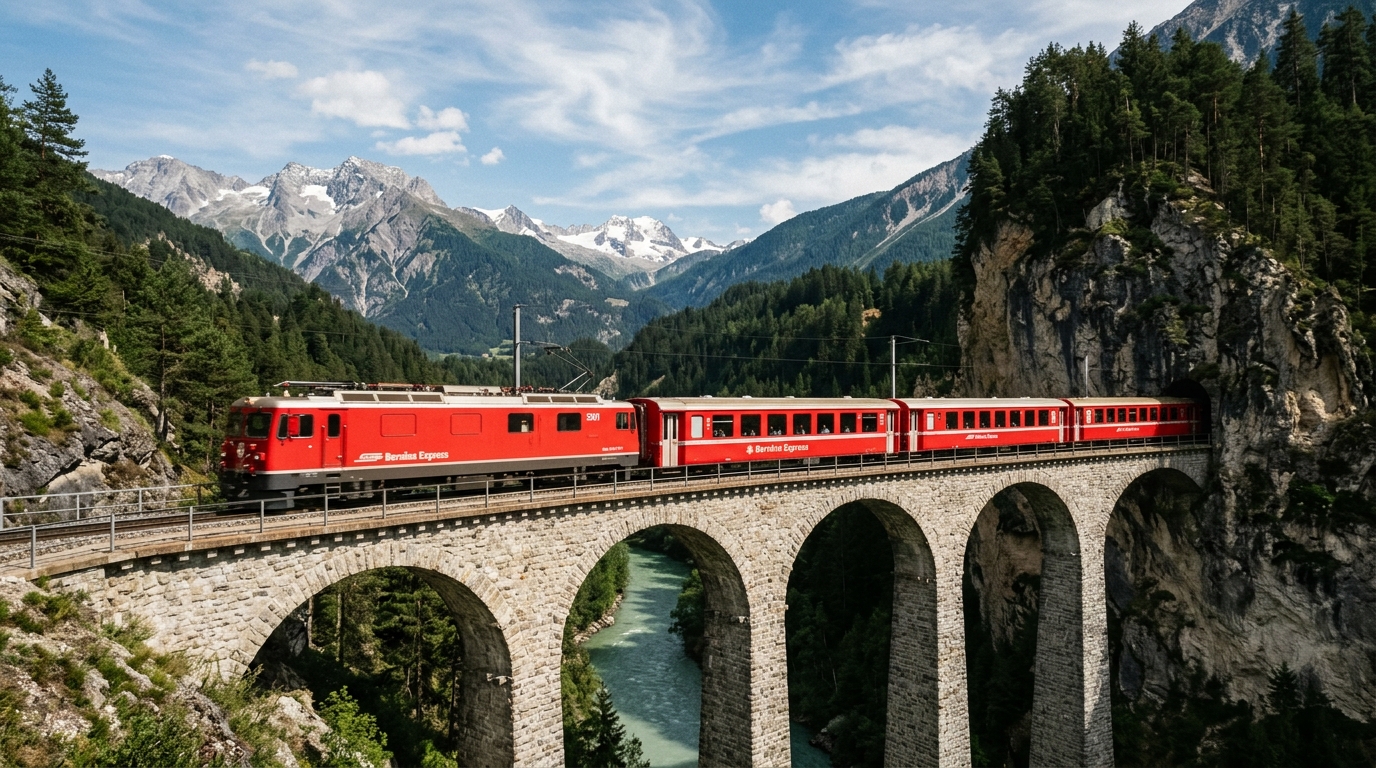
- Panoramic Premiums: Access to the Glacier Express and Bernina Express (though seat reservations still require a separate fee).
The pass is available for 3, 4, 6, 8, or 15 consecutive days. There is also a "Flex" version if you plan to stay put in one village for a few days before moving on. However, for most travelers hitting the classic "Grand Train Tour" highlights, the consecutive pass offers the best value. Check the latest 2026 seasonal pricing on swissrail.net.
Should you buy the pass or stick to point-to-point tickets?
Here is the cold, hard truth about Swiss rail: it is expensive. A single one-way ticket from Zurich to Zermatt can easily set you back CHF 125 if you buy it on the day. But does that mean the pass is always the winner? Not necessarily. If you are only taking one train from the airport to a single resort and staying there for a week, point-to-point tickets (specifically "Supersaver" tickets) might save you a few francs. But you lose the ability to change your mind. If it starts raining in Interlaken and you decide to flee to the sunny museums of Lugano, the Swiss Travel Pass makes that whim free.
| Travel Type | Sample Itinerary Cost (P2P) | Swiss Travel Pass (4-Day) | Potential Savings | Booking Link |
|---|---|---|---|---|
| The "Classic Loop" (Zurich-Lucerne-Interlaken-Zermatt) | CHF 380+ | CHF 295 | CHF 85+ | Book Now |
| The "Mountain Hopper" (Interlaken-Jungfrau-Rigi-Pilatus) | CHF 450+ | CHF 295 (plus mt. supplements) | CHF 120+ | Book Now |
For the majority of visitors, the Swiss Travel Pass becomes "profitable" the moment you add a boat cruise and a single mountain excursion to your inter-city travel. If you hate math and want to enjoy your vacation without a calculator, the pass is a no-brainer. Secure your 2026 pass online to avoid the long queues at the airport rail center.
1st Class vs. 2nd Class: Is the upgrade worth your money?
Swiss second-class carriages are cleaner and more punctual than the first-class service in most other countries. So, why pay the premium for first? It comes down to "elbow room" and silence. In 2026, as tourism continues to surge, the main inter-city lines between Geneva, Bern, and Zurich can get crowded during peak hours. First class usually offers more space, significantly larger windows, and a much higher chance of snagging a solo seat or a table for two.
But here is a pro tip: the views are exactly the same. The mountains don't look "more majestic" through a first-class window. The real benefit of a 1st Class Swiss Travel Pass is the peace of mind on popular panoramic routes where 2nd class can feel a bit like a school bus. If you are traveling for a honeymoon or a milestone anniversary, the upgrade is a lovely luxury. If you are a solo backpacker or a family with young kids who are going to be noisy anyway, stick to 2nd class and spend the savings on chocolate.
You can always do a "Class Upgrade" for a specific leg of your journey via the SBB app. This is perfect if you want to try first class just for the scenic GoldenPass Express leg from Montreux to Interlaken. Compare 1st and 2nd class rates on swissrail.net.
The Mountain Rail "Trap": What is actually free?
This is where most travelers get tripped up. The Swiss Travel Pass does not cover every single cable car to every single peak. Most mountain railways are private enterprises. They view the pass as a discount card, not a golden ticket. However, there are three major exceptions where your pass gets you to the summit for zero extra centimes: Mt. Rigi, Mt. Stanserhorn, and the Stoos funicular.
For the heavy hitters like the Jungfraujoch (Top of Europe) or Mt. Titlis, you will generally get a 25% to 50% discount. In 2026, the Swiss Travel Pass remains the best way to lower the staggering cost of high-altitude excursions like the Gornergrat cogwheel railway. Always check the "Area of Validity" map—it uses solid lines for included travel and dotted lines for discounts.
Common Mountain Excursion Costs with STP
- Mt. Rigi: covered for eligible pass holders.
- Mt. Pilatus: 50% Discount.
- Jungfraujoch: 25% Discount from Wengen/Grindelwald.
- Schilthorn: 50% Discount (The James Bond mountain).
- Gornergrat (Zermatt): 50% Discount.
Honestly, if you do Rigi and Stanserhorn, the pass has practically paid for its daily rate already. Check current mountain rail supplements on swissrail.net.
Boats, Buses, and 500+ Museums: The Hidden Value
Most people buy the pass for the trains, but they fall in love with it for the boats. There is something deeply civilized about walking off a train in Lucerne and stepping directly onto a waiting steamship. You don't need a reservation. You don't need a separate ticket. You just walk on. The Swiss Travel Pass turns every major lake into a highway, allowing you to commute between lakeside villages while lounging on a sun deck.
Then there are the museums. If you find yourself in a sudden downpour, you can duck into the Olympic Museum in Lausanne or the Ballenberg Open Air Museum without thinking about the CHF 20-30 entry fee. It encourages exploration. You might spend twenty minutes in a quirky local clock museum just because you can. For families, this is a lifesaver. The Swiss Museum of Transport in Lucerne is a must-visit, and while the pass only offers a discount there (rather than included admission), the savings across other sites add up fast.
Itinerary Examples: Making the most of your 2026 trip
How do you actually string these benefits together? Here are two ways to play it, depending on how much time you have.
The 4-Day "Alpine Essentials" Itinerary
This is for the traveler who wants the "Greatest Hits" without feeling like they live on a train. Start in Zurich and head straight to Lucerne. Spend day one on Lake Lucerne and the top of Mt. Rigi (all free with your pass). On day two, take the Luzern-Interlaken Express—part of the GoldenPass line—over the Brünig Pass. Day three is for the Lauterbrunnen Valley; use your pass for the train to Wengen and the cable car to Mürren. On day four, take the long way back to Zurich via the lakeside town of Thun. This 4-day loop would cost roughly CHF 420 in individual tickets, but the Swiss Travel Pass covers it for under CHF 300.
The 8-Day "Total Switzerland" Itinerary
With eight days, you can cover the four linguistic corners of the country.
- Zurich to St. Moritz (The luxury start).
- St. Moritz to Zermatt via the Glacier Express (The "Slowest Express Train in the World").
- Zermatt mountain day (Gornergrat).
- Zermatt to Montreux (The French Riviera of Switzerland).
- Montreux to Interlaken via the GoldenPass Express.
- Interlaken/Jungfrau region exploration.
- Interlaken to Bellinzona (The Italian-speaking castles).
- Bellinzona to Zurich via the Gotthard Panorama route.
Pro Tips for the Veteran Swiss Traveler
- Download the SBB Mobile App: This is non-negotiable. It shows you live platforms, occupancy levels (so you can find the quiet carriages), and even where the family zones are located.
- Skip Reservations: Unless you are on a specific panoramic train like the Glacier Express, you do not need seat reservations. Just sit in any unreserved seat. If there is no name on the digital display above the seat, it's yours.
- The "Magic" Luggage Service: SBB offers a service where they move your suitcases from station to station or even hotel to hotel. It isn't free, but using it alongside your Swiss Travel Pass makes you feel like a VIP.
- The Family Card is Free: If you are traveling with children under 16, request the Swiss Family Card when you buy your pass. It allows them to travel absolutely free with a parent. It is the best deal in global travel.
- Validate the Night Before: If you have a 2026 mobile pass, ensure it is downloaded and "active" in your digital wallet before you land. Swiss airport Wi-Fi is good, but you don't want to be troubleshooting at the turnstile.
- Watch the Dining Car: On longer routes, the dining car is a treat. The food is high quality, and there is nothing quite like eating a Rösti while flying through the Alps at 100km/h.
Frequently Asked Questions
Does the Swiss Travel Pass cover the Glacier Express?
Yes, the pass covers the entire fare for the Glacier Express, but you must pay a separate seat reservation fee which varies by season. In 2026, these reservations range from CHF 39 to CHF 49 depending on the length of the journey. Book your Glacier Express reservations via swissrail.net.
Is the Jungfraujoch free with the Swiss Travel Pass?
No, the Jungfraujoch is not free; however, your pass covers the journey as far as Wengen or Grindelwald and gives you a 25% discount on the final "Eiger Express" or cogwheel leg to the summit. This discount applies even during the peak 2026 summer season.
Do I need to print my Swiss Travel Pass?
No, a digital PDF on your smartphone is perfectly acceptable for all SBB conductors. Many travelers prefer to keep a printed backup in their luggage just in case of a dead battery, but the QR code on your phone is the standard way to travel in 2026. Receive your digital pass via email from swissrail.net.
Can I use the pass to get from Zurich Airport to the city center?
Yes, the Swiss Travel Pass is valid the moment you arrive, covering the 10-minute train ride from Zurich Flughafen to Zurich Hauptbahnhof. This also applies to Geneva and Basel airports, making the "airport transfer" part of your pass value.
Is the Swiss Travel Pass Flex better than the standard pass?
The Flex pass is better only if you plan to stay in one location for several days without using any trains, buses, or boats. If you plan to move every day or even every other day, the consecutive Swiss Travel Pass is cheaper and more convenient. Compare Flex vs. Consecutive prices on swissrail.net.
Final Thoughts on Navigating Switzerland
Switzerland is a country that functions like a giant, clockwork machine. The Swiss Travel Pass is your invitation to become a gear in that machine. It removes the "should we?" from your travel vocabulary. Should we take that boat across the lake? Yes, it's free. Should we go to that museum because it's raining? Yes, it's free. It changes the psychology of your trip from one of budgeting to one of pure discovery. In 2026, there is no more efficient or liberating way to see the Alps. So, pack your most comfortable walking shoes, charge your phone, and get ready for the best rail journey of your life. Book your Swiss Travel Pass today at swissrail.net and start planning your route.