Swiss Train Tickets: How to Save 70% in 2026 [FAQ Guide]
Key Takeaway: Swiss trains are wildly efficient, but walking up to the ticket counter on the day of travel is a rookie mistake that will cost you. A standard Zurich to Geneva ticket runs about CHF 90, but booking a Supersaver ticket 60 days in advance drops that price by up to 70%, while the journey still takes exactly 2 hours and 41 minutes. For the absolute best rates and seamless e-tickets, book your Swiss train tickets online at swissrail.net well before your trip.
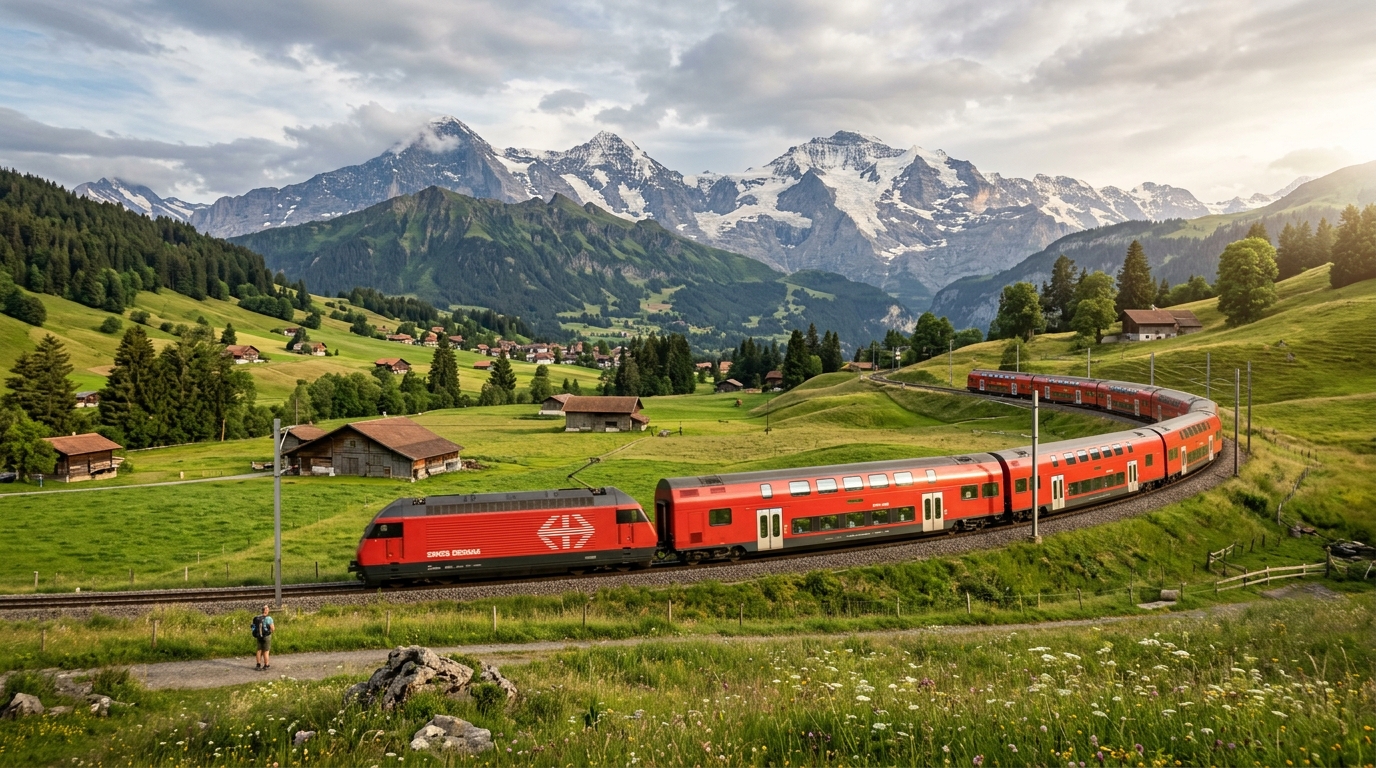
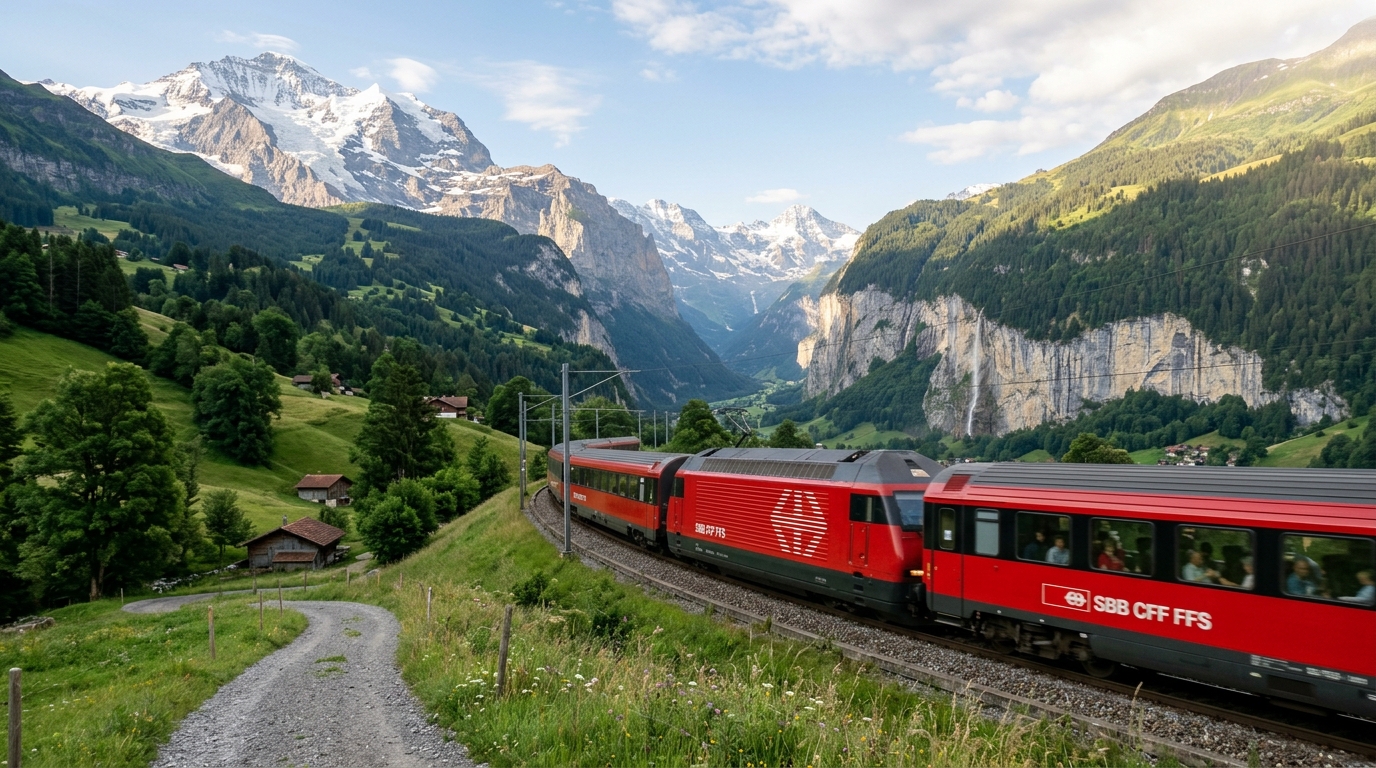
Picture this. You are sitting by a massive panoramic window, gliding past the turquoise waters of Lake Brienz at exactly 100 kilometers per hour. A sharply dressed conductor punches your ticket with a smile. Your coffee hasn't spilled a single drop. Welcome to the reality of the Swiss rail network, a system so famously punctual that locals literally set their watches by the station departure boards. But mastering this network requires a bit of insider knowledge. If you are looking for a comprehensive guide on how to buy Swiss train tickets and everything you need to know before you travel in 2026, you are in the right place.
I have spent years riding these rails, from the double-decker commuter trains of Zurich to the narrow-gauge mountain railways of the Graubünden canton. And here is the unvarnished truth. The system is brilliant, but the pricing structure can be incredibly confusing. Do you need a pass? Should you buy individual tickets? What happens if you miss your connection? Let's fix that confusion right now.
Quick Overview: Swiss Train Tickets at a Glance
Before we get into the heavy details, here are the baseline facts you need to understand about riding the rails and buying Swiss train tickets in Switzerland this year.
- Punctuality is a religion: Trains leave exactly on the minute. If the board says 14:03, the doors lock at 14:02 and 45 seconds.
- Reservations are rarely required: Unlike France or Italy, standard Swiss trains operate on a "hop-on, sit-anywhere" basis. Scenic tourist trains are the only major exception.
- Tickets are tied to routes, not specific trains: A standard point-to-point ticket is valid for the whole day on that specific route. Supersaver tickets, however, lock you to a specific departure time.
- The network is integrated: One ticket often covers the train, the postbus, and even the lake ferry you need to reach your final alpine village.
Swiss Train Tickets vs. Rail Passes: Which is Better?
This is the single most common question I get from travelers planning their itineraries. The Swiss ticketing system offers a dizzying array of options for 2026, and picking the wrong one can easily cost you hundreds of extra francs.
The Swiss Travel Pass
Think of this as the ultimate "easy button" for Switzerland. It gives you unlimited travel on consecutive days (3, 4, 6, 8, or 15) across trains, buses, and boats. You literally just walk onto the train and sit down. It also includes free entry to over 500 museums. But convenience comes at a premium. For most travelers staying longer than a week, the Swiss Travel Pass is actually more expensive than buying a Half Fare Card and individual tickets. Still, if you value absolute freedom and plan to take multiple long journeys, it is a fantastic product. Check out our complete Swiss Travel Pass Guide for a deeper mathematical breakdown.
The Swiss Half Fare Card
This is my personal favorite for 80% of visitors. You pay a flat fee upfront (around CHF 120 for a month). Then, every single ticket you buy—including mountain cable cars—is half price. If you are doing a standard 10-day itinerary visiting three or four cities, this almost always works out cheapest. The math rarely lies. Once you have your card, book your half-fare Swiss train tickets at swissrail.net to maximize your savings.
Point-to-Point and Supersaver Tickets
If you are only taking one or two train rides, just buy standard tickets. But be smart about it. SBB (the national railway) releases "Supersaver" tickets up to 60 days in advance. These can be up to 70% cheaper than standard fares. The catch? You are locked into that exact train time. If you miss it, the ticket is garbage. For the best selection of these discounted fares, check latest prices on swissrail.net.
| Ticket Type | Best For | Flexibility | Where to Buy |
|---|---|---|---|
| Swiss Travel Pass | Fast-paced travelers doing daily long trips | Maximum (Hop on any train) | Book Pass |
| Half Fare Card | Trips over 5 days with mixed travel | High (Buy half-price tickets anytime) | Book Card |
| Supersaver Ticket | Budget travelers with fixed schedules | Zero (Valid only on selected train) | Book Tickets |
| Standard Ticket | Short, spontaneous day trips | High (Valid all day on route) | Book Tickets |
Navigating the Stations and Boarding
Swiss railway stations are marvels of logistics, but they can be intimidating during the morning rush. The signage is highly standardized. Yellow posters show departures (Abfahrt), and white posters show arrivals (Ankunft). But you should really just rely on the digital overhead boards.
Finding Your Platform
Most major stations have a massive central split-flap or digital board. Find your destination, note the platform (Gleis/Voie), and head there. For complex hubs, knowing the layout helps immensely. If you are passing through the capital, our Bern Railway Station Guide: 2026 Layout & Transfer Tips is a lifesaver. Look closely at the platform screens. They show a graphic of the train separated into sectors (A, B, C, D). This tells you exactly where the First Class and Second Class carriages will stop. Stand in the right sector, and the doors will open right in front of you.
Airport Transfers
Switzerland makes flying out incredibly painless. The train stations are built directly underneath the major airports. If you are flying out of Geneva, the connection is ridiculously fast. Read our Geneva Cornavin Station Guide: 6-Min Airport Transfer [2024] to see how easy it is. Zurich's airport station (Zürich Flughafen) is similarly integrated, with trains to the main city station leaving every 10 minutes.
Swiss trains stop at stations for as little as two minutes, so you must be standing at the door with your luggage before the train comes to a complete halt.
Seat Reservations and Classes: What to Expect
Let's talk about comfort. Swiss trains are generally excellent across the board, but there are distinct differences between the classes.
First Class vs. Second Class
Second class is perfectly adequate for almost everyone. The seats are clean, the legroom is decent, and there are usually power outlets available. First class gets you wider seats (usually three across instead of four), more legroom, quieter carriages, and slightly better panoramic windows on certain routes. Is it worth the 75% price premium? Usually no. But if you are traveling during peak commuter hours with heavy luggage, the extra space in First Class can be a godsend. For a full breakdown of the amenities, see our Swiss Train Seat Classes Guide.
Do You Need to Reserve a Seat?
On 95% of Swiss trains, no. You just buy a ticket and sit wherever there is an empty seat. If a seat is reserved, there will be a small digital display or paper ticket above it indicating the reserved route (e.g., "Bern - Zurich"). If your journey doesn't overlap with that segment, you can sit there. However, you absolutely must reserve seats on the famous tourist trains. Speaking of which, whenever you are ready to lock in your itinerary, book your Swiss train tickets online at swissrail.net to secure your spot.
| Feature | Second Class | First Class |
|---|---|---|
| Seating Layout | 2x2 (4 seats across) | 2x1 (3 seats across) |
| Crowd Levels | Can be busy during rush hour | Usually quiet and spacious |
| Luggage Space | Standard racks at ends and overhead | Extra space between seats |
| Power Outlets | Most intercity trains | Every seat guaranteed |
| Price | Standard Fare | Approx. 75% higher |
Panoramic and Scenic Routes
You probably came to Switzerland for the views. The standard intercity trains offer gorgeous scenery, but the dedicated panoramic routes are entirely different beasts. They feature massive curved windows that reach into the ceiling, turning the train into a moving glass observation deck.
The Heavy Hitters
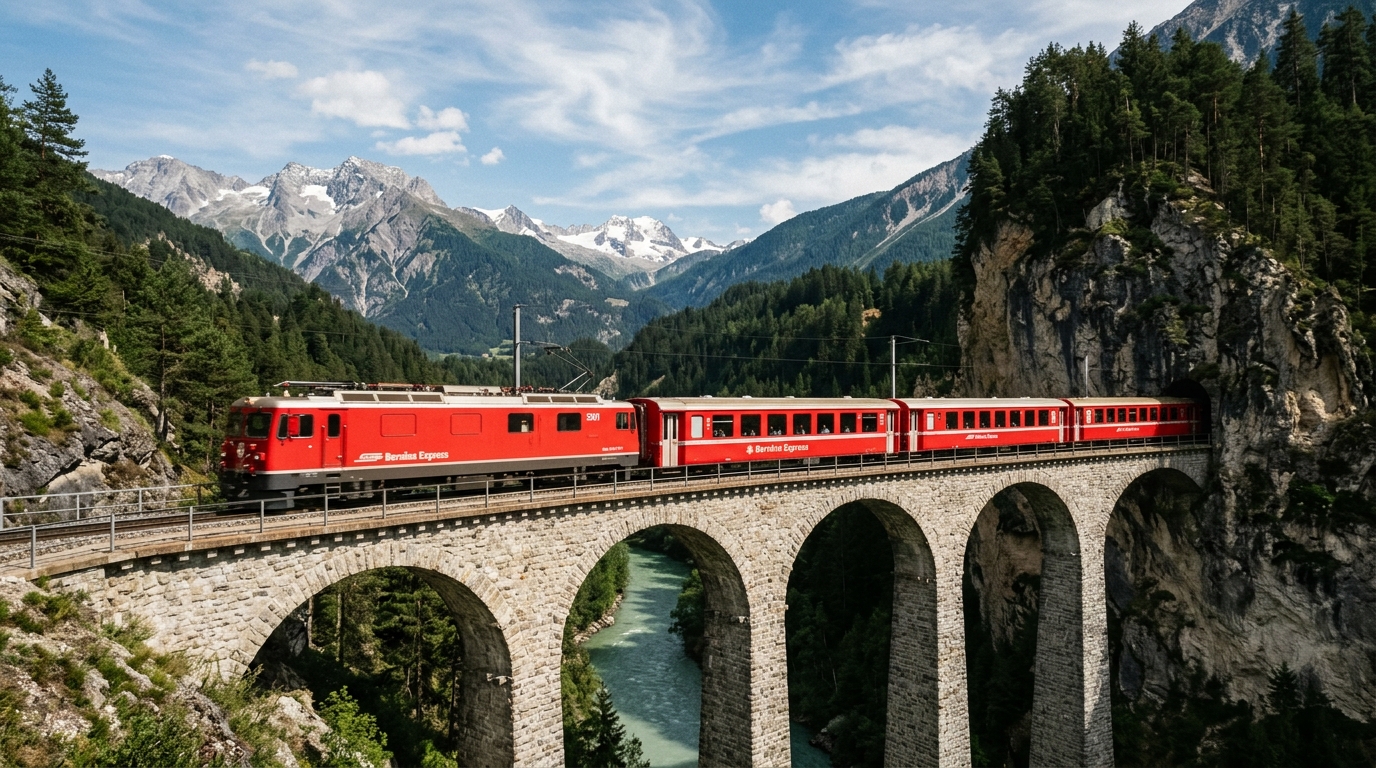
The Glacier Express is the most famous, branded as the "slowest express train in the world." It takes about 8 hours to travel between Zermatt and St. Moritz, crossing 291 bridges. The Bernina Express is arguably even more spectacular, climbing over the Alps into Italy without the use of cogwheels. And then there is the GoldenPass line, which links central Switzerland to the French-speaking Riviera. If you are planning to ride any of these, our Swiss Panoramic Train Guide covers the specific booking windows. Remember, these trains require mandatory seat reservations on top of your ticket, and they sell out months in advance for summer 2026 dates.
Step-by-Step: How to Buy Swiss Train Tickets Online for 2026
Purchasing your Swiss train tickets shouldn't be a hassle. To ensure you get the best Supersaver rates and avoid long queues at the station, follow these simple steps:
- Plan Your Route: Decide whether you are doing a simple point-to-point journey (like Zurich to Geneva) or a multi-day scenic tour.
- Check the 60-Day Window: Remember that the cheapest Swiss train tickets are released exactly 60 days before the date of travel. Set a calendar alert!
- Compare Passes vs. Tickets: Do the math. If your total individual ticket costs exceed CHF 120, you should strongly consider adding a Half Fare Card to your cart.
- Book via a Trusted Portal: Head over to swissrail.net to book your Swiss train tickets securely. You will receive digital e-tickets instantly with a QR code.
- Save to Your Phone: While you can print them, Swiss conductors are perfectly happy scanning the QR code directly from your smartphone screen. Make sure your phone is charged!
6 Pro Tips for Swiss Train Travel
After countless trips across this network, I have developed a few hard-and-fast rules to make the journey smoother.
- Master the SBB Mobile App: It is the best transit app in the world. You can check platforms, buy tickets, and see real-time delay predictions. The app even shows a "crowd forecast" (three little red figures means the train will be packed).
- Use the SBB Luggage Service: Dragging four heavy suitcases onto a train is miserable. For a fee, SBB will transport your luggage from station to station, or even directly from your airport arrival gate to your hotel. Learn more about the limits in our Swiss Train Luggage and Boarding Rules article.
- Look for the Family Carriages: If you are traveling with young kids, look for the train cars with a bear or jungle motif painted on the outside. These double-decker cars have actual playgrounds on the upper level. It is a brilliant way to burn off energy on the Zurich to Geneva train route.
- Know your boat connections: Many rail passes include lake steamers. If you are heading to central Switzerland, check our Lucerne Railway Station: 2026 Guide to Train & Boat Transfers to see how seamlessly the trains sync with the boat departures right outside the station doors.
- Bring your own picnic: While the dining cars (Bordbistro) serve decent food, it is shockingly expensive. A basic plate of pasta and a beer will easily run you CHF 30. Locals simply buy fresh bread, cheese, and wine from the Coop or Migros supermarkets located inside the station and eat at their seats. It is completely allowed.
- Book through a dedicated portal: To avoid currency conversion fees and navigate the complex fare structures in plain English, book your Swiss train tickets via swissrail.net. It saves time and prevents costly mistakes at the kiosk.
Frequently Asked Questions
Do I need to reserve seats on Swiss trains?
No, seat reservations are generally not required on standard Swiss trains, as they operate on a first-come, first-served basis. Reservations are only mandatory for specialized scenic tourist trains like the Glacier Express or Bernina Express.
How far in advance should I book Swiss train tickets?
You should book Swiss train tickets up to 60 days in advance to secure Supersaver discounts that can reduce the price by up to 70%. Booking early on swissrail.net ensures you get the best available rates before they sell out.
Is the Swiss Travel Pass worth it for 2026?
The Swiss Travel Pass is worth it for travelers planning extensive travel over 3 to 15 consecutive days, as it offers unlimited access to trains, buses, and boats. It also includes free entry to over 500 museums across the country.
What is a Swiss Supersaver ticket?
A Supersaver ticket is a discounted point-to-point fare that is valid only for a specific train departure time and route selected during the booking process. Unlike standard tickets, they do not allow for travel on earlier or later trains.
Can I use one ticket for both trains and buses in Switzerland?
Yes, the Swiss transport system is fully integrated, meaning a single ticket usually covers the entire journey including trains, PostBuses, and lake ferries. This seamless connectivity allows for easy transfers between different modes of transport.
How punctual are Swiss trains?
Swiss trains are famously punctual, with the vast majority of services departing exactly on the minute listed on the station boards. It is recommended to be on the platform at least 3-5 minutes before the scheduled departure.