Interlaken Ost vs West: Which Train Station Should You Use?
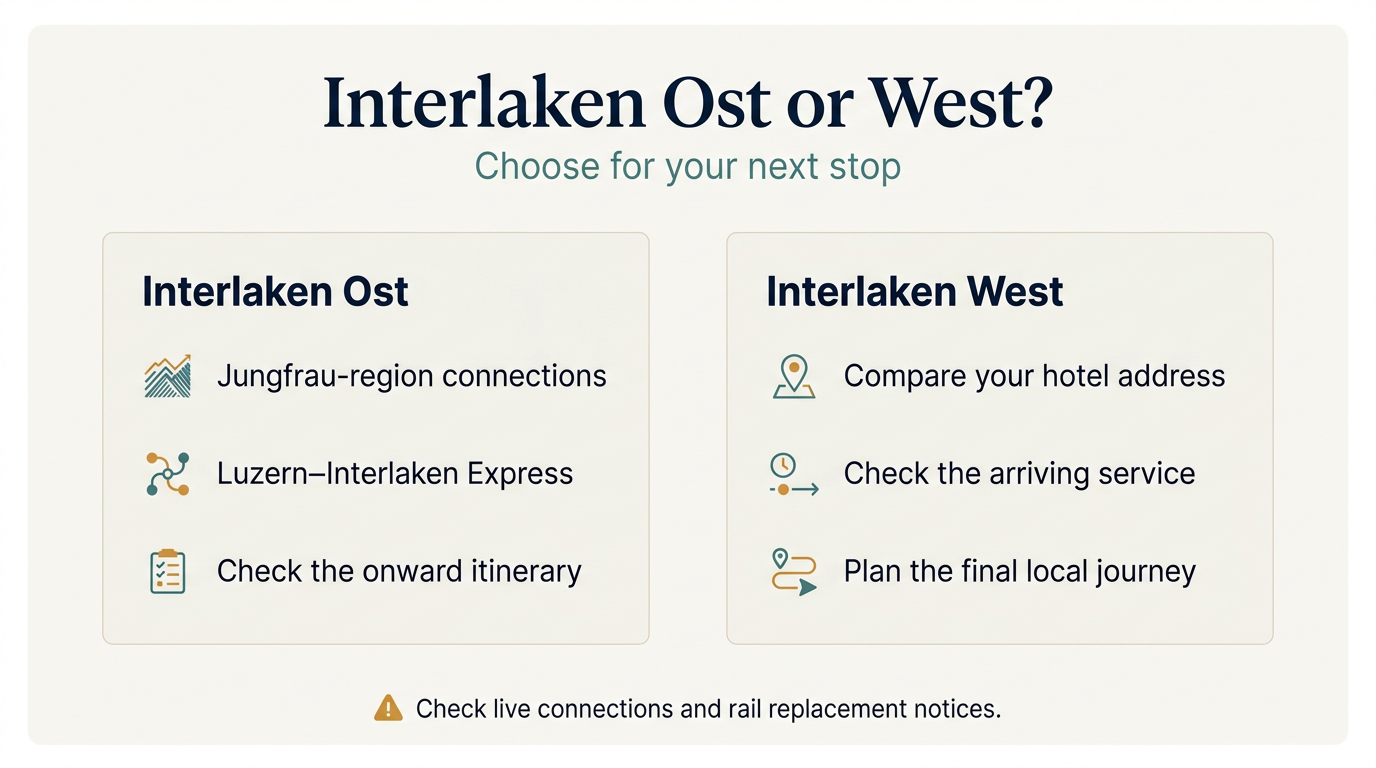
Ost and West are separate stations. Compare your accommodation address and arriving service; Ost serves onward journeys towards the Jungfrau region and the Luzern–Interlaken Express. The choice diagram does not promise a train between the stations. Construction can require replacement buses: consult the current local notice and your dated itinerary. Jungfrau Getting to Jungfraujoch · Zentralbahn Luzern–Interlaken Express · Interlaken Tourism Out and about
Interlaken Ost and Interlaken West are separate railway stations in the same town. The best choice depends on where you are coming from, your accommodation and any onward journey. Ost is the key interchange for many Jungfrau-region rail trips and the terminus of the Luzern–Interlaken Express.
When Interlaken Ost is the useful choice
Choose Interlaken Ost when planning onward rail journeys towards Lauterbrunnen or Grindelwald, then open the full itinerary for the exact regional connection. Jungfraujoch is a longer mountain journey with additional transport stages; an arrival at Ost is not an arrival at the summit.
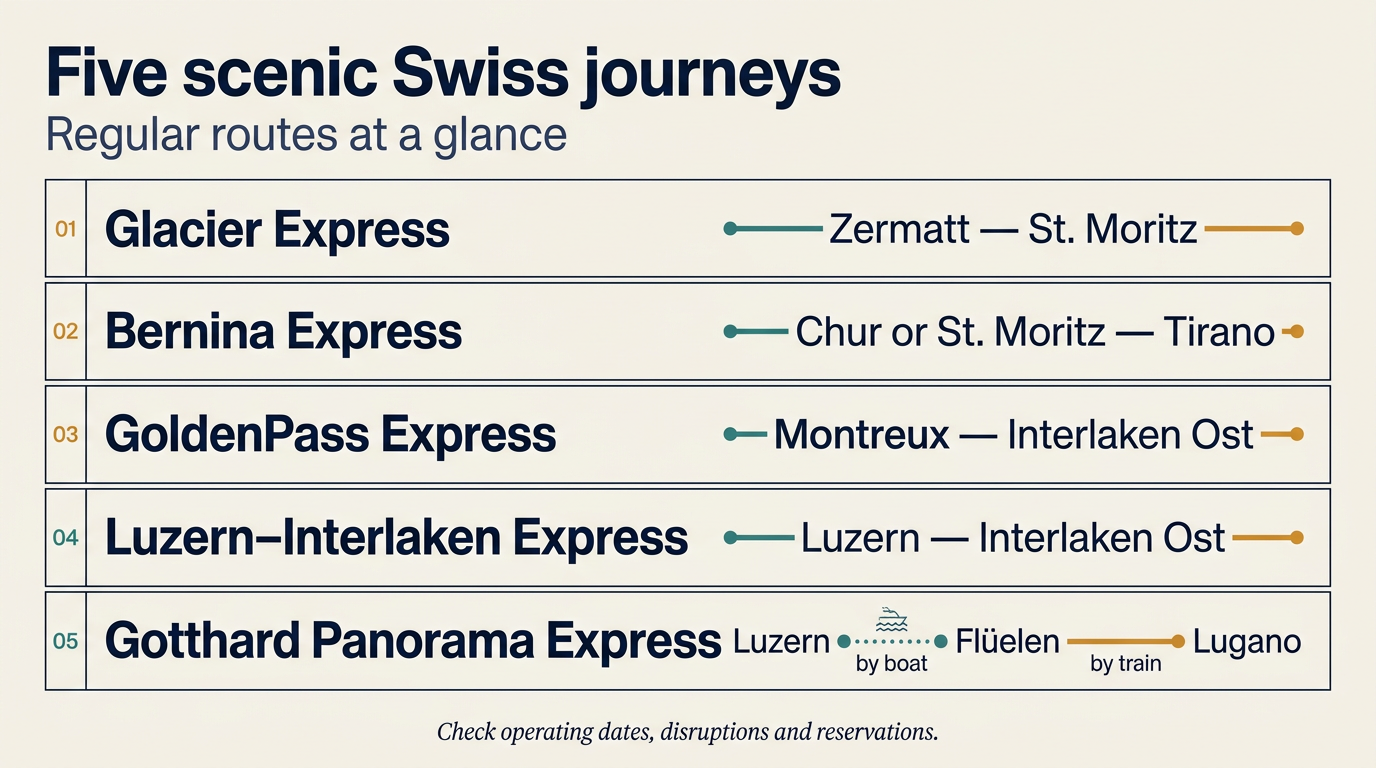
The direct Luzern–Interlaken Express ends at Interlaken Ost. If you are continuing towards Montreux on the GoldenPass Express, check that separate service and its departure details. Similar panoramic branding does not make the two routes one through train.
When to consider Interlaken West
Interlaken West can be more convenient for accommodation and activities on the western side of town. Check the actual address on a map rather than selecting the station purely because it appears first in search results.
For journeys coming through Bern and the Lake Thun corridor, inspect the stopping pattern to see which Interlaken stations the service serves. Do not assume every train arriving in the area stops at both stations, or that a ticket to one automatically allows continuation to the other.
Transferring between Ost and West
Compare a local train, bus or walk between your arrival station and final destination. The right option depends on the departure time, luggage, weather and mobility needs. Use the current planner for walking time and any local fare.
A short geographical distance can still be an inconvenient transfer with several suitcases. If you are connecting to a reserved panoramic departure, allow time for the station change and boarding rather than planning around the shortest possible interchange.
Tickets beyond Interlaken
Search to your final destination if you intend to continue immediately into the Jungfrau region. A ticket ending at Interlaken Ost may not cover the next regional or mountain section. Review pass coverage and supplements separately for mountain trips.
For a day trip to Jungfraujoch, check weather, operating information and the required booking conditions before departure. Keep the return journey in the plan; sightseeing time at altitude and the final departure back to your base are part of the same day.
Avoid station-name booking mistakes
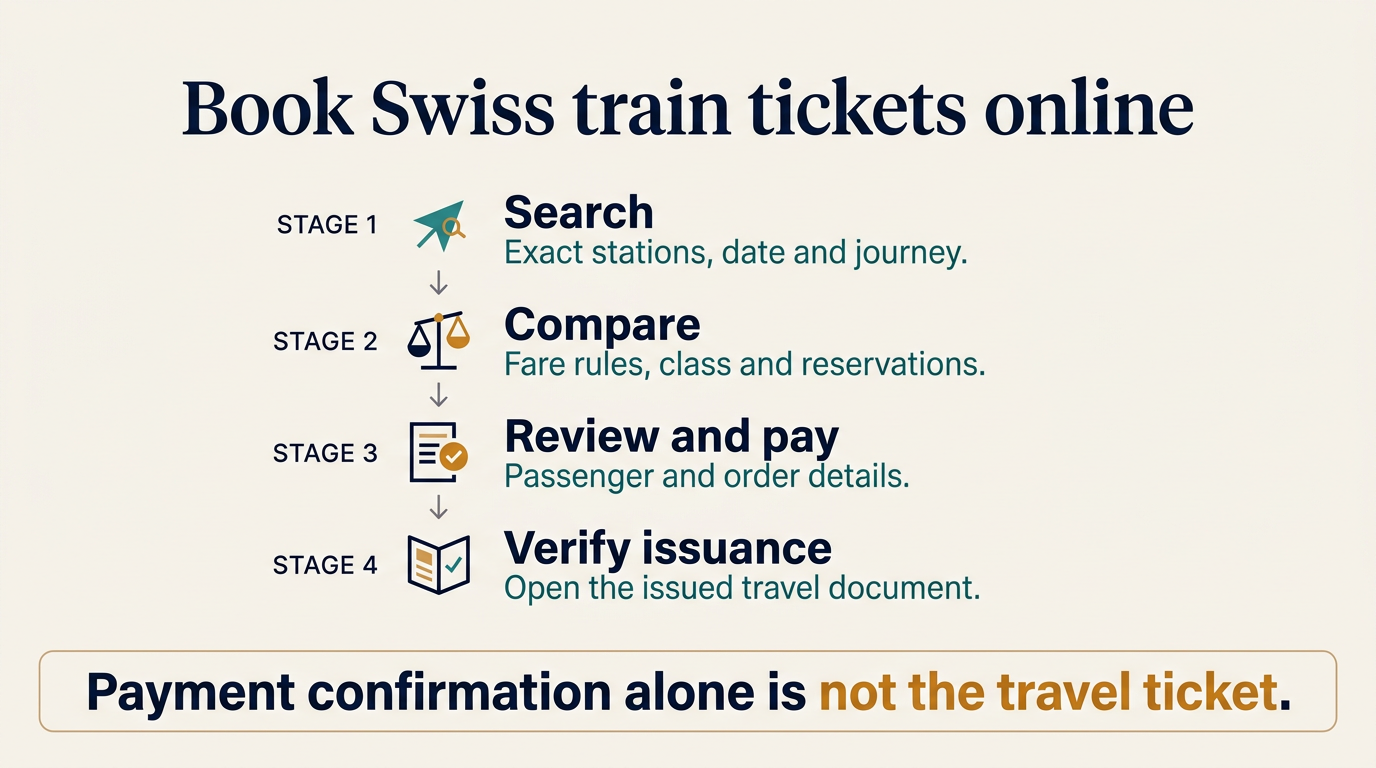
Use the complete station name on the booking confirmation, not simply “Interlaken”. Check that arrival station, accommodation location and next departure station make sense together. Save the itinerary so it is accessible while travelling.
Check live platform information at the station. Platform numbers, construction arrangements and accessibility routes can change. A static station guide should help you choose the right station, while the current operator information handles the details on the day.
Related SwissRail guides
Operator information and journey planning
- Zentralbahn: Luzern–Interlaken Express
- Jungfrau Railways: Jungfraujoch journey planning
- SBB timetable and journey planning
For travel from 1 May to 31 October 2026, Jungfrau Railways requires a seat reservation for Eigergletscher–Jungfraujoch or Kleine Scheidegg–Jungfraujoch, in addition to a valid travel ticket. Check the operator’s reservation page for the date and connection you choose. Operator details.